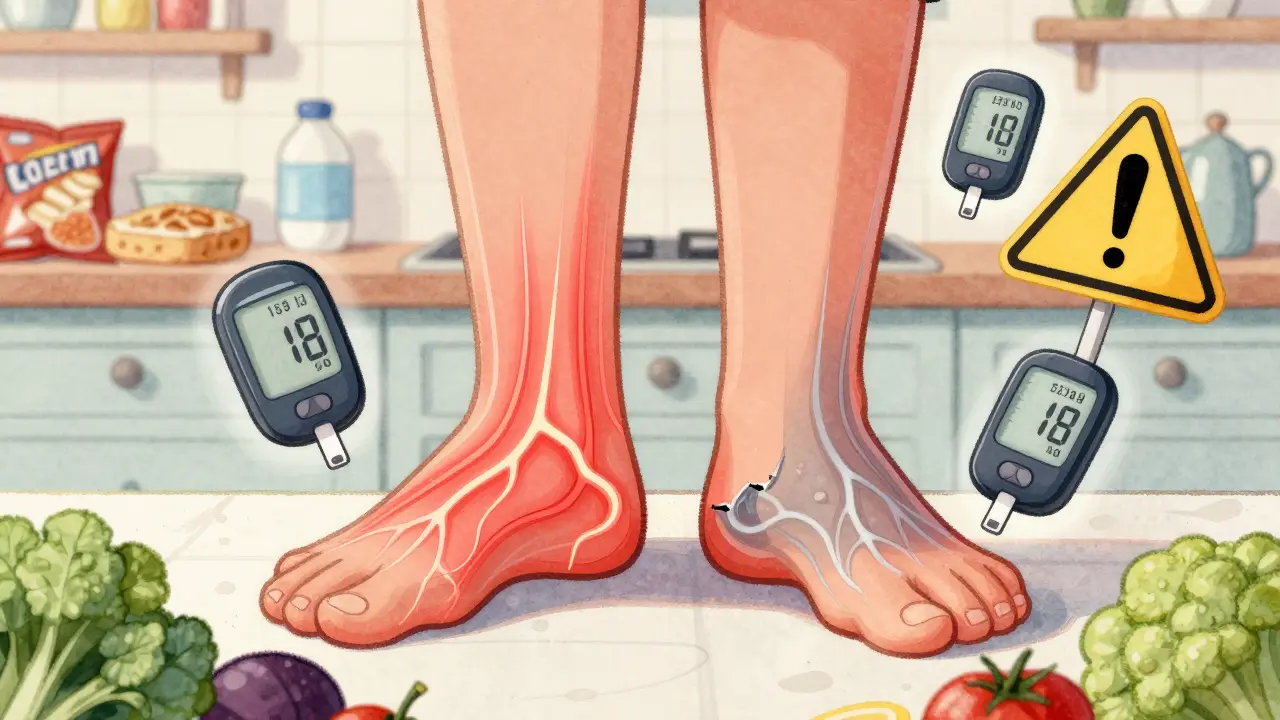
What Is Diabetic Neuropathy?
Diabetic neuropathy isn’t just tingling or numbness-it’s actual nerve damage caused by years of high blood sugar. It’s the most common complication of diabetes, affecting 60-70% of people with the condition. The damage usually starts in the feet and legs, but can spread to hands and arms over time. You might feel burning, stabbing pain, or worse-complete numbness that makes it hard to feel a blister or cut, increasing the risk of infection and even amputation.
It’s not just about discomfort. Nerve damage changes how your body works. You might lose balance, have trouble walking, or notice your digestion, bladder, or heart rate acting up. The key fact most people miss: the damage starts long before you feel pain. By the time you notice symptoms, nerves are already injured. That’s why controlling blood sugar early is the most powerful tool you have.
Why Blood Sugar Control Is Non-Negotiable
There’s no magic pill that fixes nerve damage if your blood sugar stays high. The science is clear: keeping your HbA1c below 7% cuts your risk of developing neuropathy by 60%, according to the landmark DCCT study. That’s not a suggestion-it’s the foundation of everything else you do.
Target numbers matter. Aim for fasting glucose between 80-130 mg/dL and under 180 mg/dL two hours after meals. It’s not about perfection. It’s about consistency. One high-sugar meal won’t wreck your nerves, but daily highs will slowly destroy them. People who get their sugar under control often see symptoms improve within a year-even numbness can start to fade.
But here’s the hard truth: only 14% of people with diabetes hit these targets. Most struggle with diet, medication timing, or stress. That’s why working with a Certified Diabetes Care and Education Specialist (CDCES) can make all the difference. They don’t just give you a meal plan-they help you build habits that stick.
First-Line Medications for Pain Relief
If you’re already experiencing pain, you need relief. But not all painkillers work the same. Over-the-counter ibuprofen or acetaminophen won’t touch diabetic nerve pain. In fact, long-term NSAID use can hurt your kidneys-already at higher risk with diabetes.
Doctors start with three FDA-approved options:
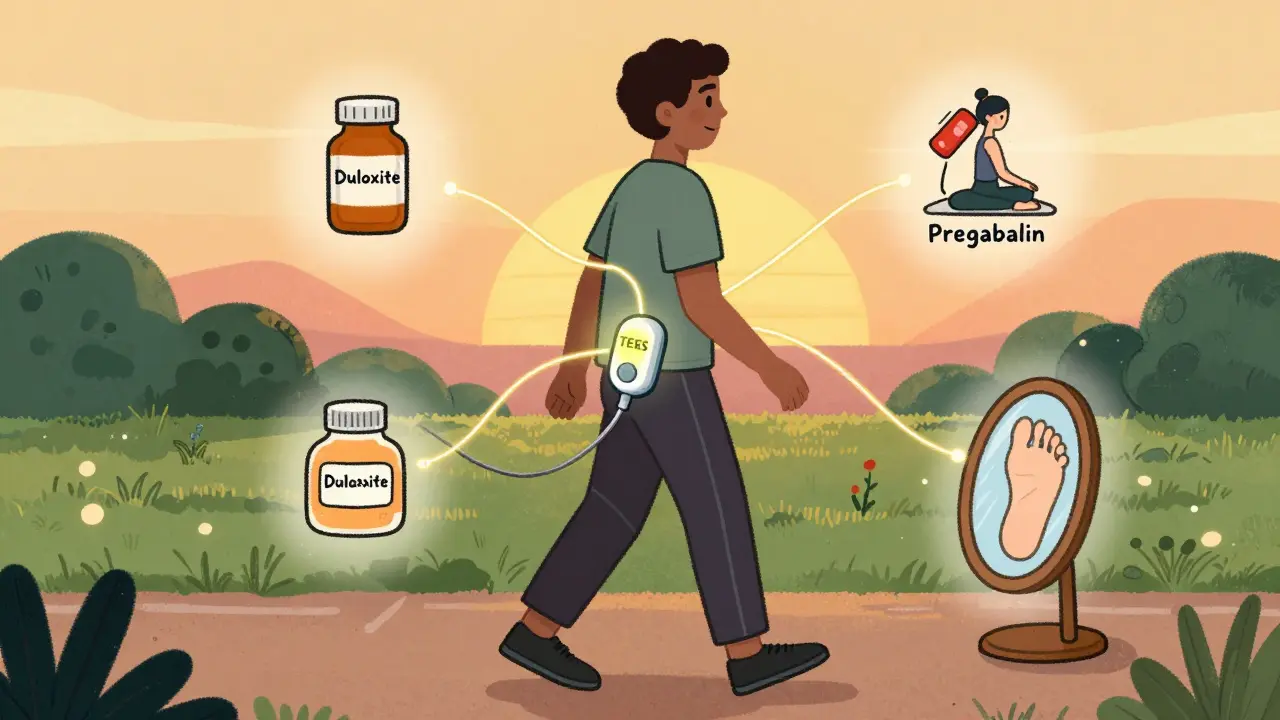
- Duloxetine (Cymbalta) - A serotonin-norepinephrine reuptake inhibitor (SNRI). In clinical trials, 35% of patients got at least 50% pain reduction, compared to just 18% on placebo.
- Pregabalin (Lyrica) - An anticonvulsant that calms overactive nerves. Around 30-40% of users report major pain relief. Side effects? Dizziness, weight gain, and drowsiness.
- Amitriptyline - An older tricyclic antidepressant. It’s actually more effective than newer drugs, with 58-63% of patients seeing pain drop. But it causes dry mouth, constipation, and can be dangerous for older adults or those with heart issues.
There’s no single best drug. What works for your neighbor might make you feel worse. Your doctor will consider your age, other meds, and side effect tolerance. Many people try one for 4-6 weeks before switching. Don’t give up too soon-but don’t suffer needlessly either.
Second-Line and Alternative Treatments
If first-line drugs don’t help-or cause too many side effects-you have other options.
Tramadol is a weak opioid sometimes used for severe pain. It helps about 40-50% of users, but it’s risky. Long-term use leads to tolerance (needing higher doses) and addiction in 8-12% of users, according to the CDC. It also causes nausea and constipation.
Tapentadol is another option with similar results but slightly lower addiction risk. Still, it’s not a first choice unless everything else fails.
For localized pain-say, burning soles or tingling toes-topical treatments are a game-changer.
- Capsaicin 8% patch (Qutenza) - Applied by a doctor, this high-dose chili extract depletes pain signals in nerves. 40% of patients got 30%+ pain relief in trials. No drowsiness. No stomach issues. Just a short, warm sensation during application.
- Lidocaine 5% patches - Wearable, over-the-counter patches that numb the skin. Great for nighttime pain or when you can’t take oral meds.
These are safer for older adults or those on multiple medications. No drug interactions. No liver strain. Just direct relief where you need it.
Non-Medication Approaches That Actually Work
Medications help, but they’re not the whole story. Real improvement comes from combining drugs with lifestyle changes.
Exercise is powerful. Walking 30 minutes a day, swimming, or cycling doesn’t just lower blood sugar-it improves nerve function. Studies show regular movement increases blood flow to nerves, helping them heal. One patient in Toronto told me she went from barely walking to hiking trails after six months of daily walks and better sugar control.
Stress management matters more than you think. Chronic stress raises cortisol, which spikes blood sugar. Mindfulness, deep breathing, and yoga aren’t just “nice to have”-they’re part of treatment. A 2023 study found patients who practiced daily breathing exercises cut their pain scores by 40% in 12 weeks.
Foot care is life-saving. Check your feet every day. Use a mirror if you can’t see the bottom. Wash and dry them well. Wear soft, seamless socks. Never walk barefoot-even inside. A small cut can turn into a serious infection if you can’t feel it.
And diet? Eat real food. Vegetables, whole grains, lean proteins, healthy fats. Avoid processed snacks, sugary drinks, and white bread. Inflammation worsens nerve damage. Anti-inflammatory eating isn’t trendy-it’s medical.
Advanced Treatments: When Everything Else Fails
If pain still controls your life after trying medications and lifestyle changes, it’s time to consider advanced options.
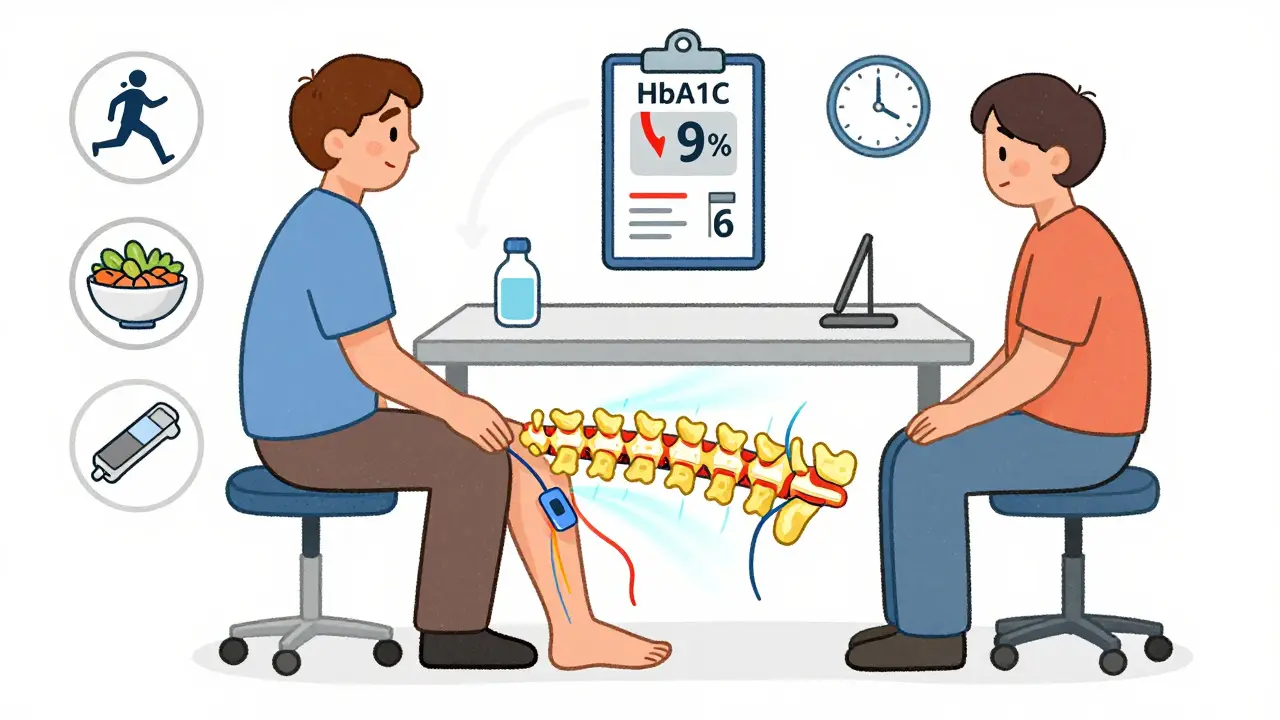
Transcutaneous Electrical Nerve Stimulation (TENS) uses small electrodes on your skin to deliver gentle pulses. In one trial, 83% of users saw pain drop from 3.17 to 1.44 on a 5-point scale-compared to just 38% with fake devices. It’s non-invasive, cheap, and you can use it at home.
Peripheral Nerve Stimulation (PNS) involves a tiny device implanted near the affected nerve. It sends electrical signals to block pain. Results last years. Recovery is quick-usually a day or two. It’s not for everyone, but for those with localized, stubborn pain, it’s life-changing.
Spinal Cord Stimulation is the newest frontier. A device implanted in your back sends pulses to your spinal cord, interrupting pain signals before they reach your brain. What’s shocking? Many patients report improved sensation-not just less pain, but actual feeling returning to numb feet. One study showed patients who hadn’t felt their toes in years could now sense a gentle touch.
These aren’t “last resort” tricks. They’re legitimate medical tools. Insurance often covers them if you’ve tried other options first. Talk to a pain specialist. Don’t assume you’re out of options.
What Doesn’t Work (and What to Avoid)
There’s a lot of noise out there. Be careful.
- NSAIDs like ibuprofen - They don’t help nerve pain and can damage kidneys or raise heart risk. Avoid long-term use.
- Alcohol - It’s toxic to nerves. Even moderate drinking speeds up damage.
- Unregulated supplements - Alpha-lipoic acid or B vitamins are often promoted, but evidence is weak. Don’t waste money unless your doctor confirms a deficiency.
- Waiting to treat - The longer you wait, the harder it is to reverse damage. Early action saves feet, mobility, and quality of life.
And remember: no single drug cures neuropathy. Most patients need a mix-medication, movement, and mindset. Dr. Richard S. Beaser of Joslin Diabetes Center says it plainly: “40-60% of patients still have pain even with optimal treatment.” That’s why you need a plan, not just a pill.
What’s Coming Next
Research is moving fast. Scientists are testing drugs that target specific pain channels in nerves-Nav 1.7 antagonists, N-type calcium blockers, NGF antibodies. These could one day repair nerves, not just mask pain.
The American Diabetes Association predicts we’ll see disease-modifying therapies in the next 5-10 years. Treatments that don’t just slow damage-but reverse it.
Until then, focus on what works now: tight blood sugar control, proven medications, daily movement, and protecting your feet. The goal isn’t just less pain. It’s staying active, independent, and in control of your life.
Can diabetic neuropathy be reversed?
In early stages, yes-especially if blood sugar is tightly controlled. Numbness and tingling can improve within a year. But once nerves are severely damaged, full reversal is rare. The goal shifts from cure to stopping further damage and managing pain. The earlier you act, the better your chances.
Why do my feet feel numb instead of painful?
Diabetic neuropathy affects different nerves in different ways. Some people feel burning or shooting pain first. Others lose sensation-numbness-because the nerves that carry touch and temperature signals are damaged. Numbness is actually more dangerous than pain because you won’t feel injuries, leading to ulcers or infections. Both are signs of nerve damage.
Is walking safe if my feet hurt?
Yes-if you wear proper shoes and check your feet afterward. Walking improves blood flow to nerves and helps lower blood sugar. Start slow: 10-15 minutes a day. If you have open sores or severe pain, switch to swimming or cycling. Never ignore a blister or red spot. See your doctor right away.
Do I need to take pain meds forever?
Not necessarily. Many people reduce or stop meds after improving blood sugar control and adding exercise, stress management, and foot care. Some use topical treatments only when needed. Others need ongoing medication, especially if damage is advanced. It’s personal. Work with your doctor to find your balance.
Can I use CBD oil for diabetic nerve pain?
There’s limited evidence. Some small studies show mild pain relief, but no large trials prove it works for diabetic neuropathy. CBD isn’t regulated, so quality and dosage vary. It may interact with your other meds. Talk to your doctor before trying it-don’t replace proven treatments with unproven ones.
How often should I see a specialist for neuropathy?
If you have symptoms, see your primary doctor every 3-6 months. If pain is uncontrolled or you’re considering advanced treatments like nerve stimulation, see a pain specialist or neurologist. Annual foot exams by a podiatrist are essential. Catching problems early prevents emergencies.
Diana Alime
December 25, 2025 AT 05:55Adarsh Dubey
December 26, 2025 AT 17:27Bartholomew Henry Allen
December 28, 2025 AT 02:53Jeffrey Frye
December 29, 2025 AT 01:20Andrea Di Candia
December 30, 2025 AT 08:58bharath vinay
December 30, 2025 AT 11:55Dan Gaytan
December 31, 2025 AT 16:31Usha Sundar
January 1, 2026 AT 07:50claire davies
January 2, 2026 AT 08:52Wilton Holliday
January 2, 2026 AT 23:15Raja P
January 3, 2026 AT 01:56Joseph Manuel
January 4, 2026 AT 09:24Spencer Garcia
January 4, 2026 AT 22:08Abby Polhill
January 5, 2026 AT 23:26Bret Freeman
January 6, 2026 AT 21:57